

Cat trees and cat condos have quietly shifted from “nice to have” to true cat owner essentials, especially in homes where cats spend most of their time indoors. The difference shows up fast in everyday behavior. A restless young cat that used to ricochet off the sofa often settles once there is a clear vertical route to follow, plus a reliable place to scratch and perch. A shy adult that hid behind the toilet may start choosing a covered cubby instead, because it feels like a safe, predictable retreat. Even better, today’s premium cat furniture is no longer an eyesore. The newest pieces are made to blend with clean interiors, with neutral textiles, modern wood finishes, and shapes that look intentional rather than bulky.
In shelter consulting, one pattern keeps repeating: when cats gain structured vertical space and a dedicated cat scratching post, tension drops and confidence rises. The same happens in apartments and busy family homes. A well-built cat tower or compact cat house can turn a single corner into a full cat activity center, giving cats choices for play, rest, and observation without asking humans to sacrifice style. The goal is not to buy “the biggest thing,” but to match height, stability, and layout to the cat’s body and personality, then place it where daily life already happens.

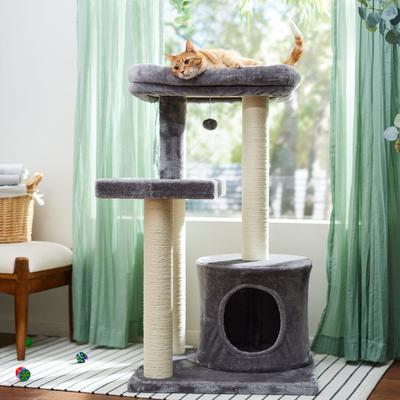
Modern cat trees and cat condos that fit real homes (and real cats)
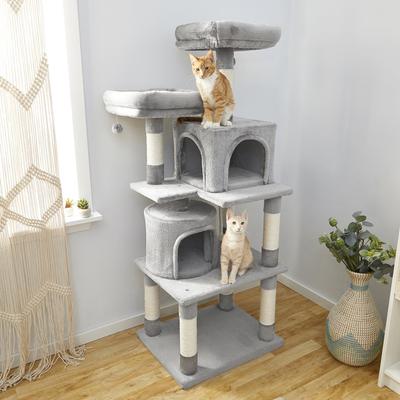
Design trends have finally caught up with what cats actually use. The most satisfying structures prioritize stable bases, rounded platform edges, and materials that handle daily wear. Many newer models lean on engineered wood paired with plush fabric and thick sisal, which matters because cats tend to scratch with the same intensity every day, not just when company is over. At a partner shelter, a tall tower with two caves and a top perch changed one timid tomcat’s routine within a week. Instead of flattening himself under a bench, he claimed the lower cave first, then “graduated” to the perch once the room felt predictable.
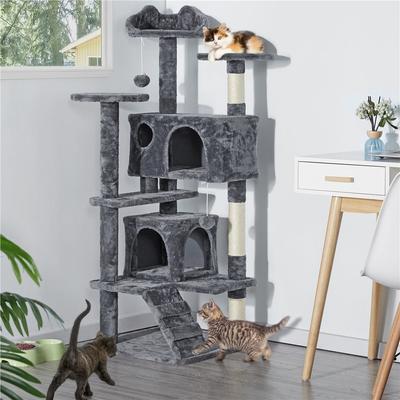
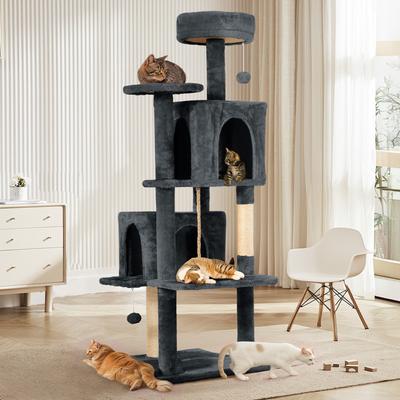
Multi-level towers around 60 to 63 inches often land in a sweet spot for households that want vertical cat climbing without a piece that dominates the room. A large multi-level design with a hammock, condo, ladder, and dangling toys works best for athletic cats who need an outlet. In one home visit, two adolescent siblings stopped launching surprise attacks from the dining chairs once a tower with staggered platforms was placed near the family’s busiest window. The cats still wanted altitude, but now it was offered in a socially acceptable location.
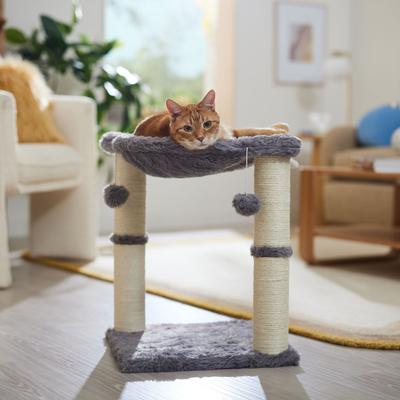
Compact builds, closer to 40 inches, tend to shine for kittens, smaller adults, and calm loungers. A condo plus a deep hammock can function like a cozy cat playhouse and nap station in one footprint. These smaller pieces are also easier to reposition, which is helpful when a cat refuses a new item for a few days (it happens). Moving it two feet closer to a window or a family area can be the difference between indifference and daily use. The most livable modern look often comes from neutral grays and cleaner lines that quietly complement living rooms instead of screaming “pet aisle.”
For a future visual, imagine three photos: a tall gray tower beside a bright window with a cat stretched on the top perch, a compact condo with a kitten tucked into a hammock, and a modern wood-finish unit that reads like furniture until a tail flicks out from the cave. That contrast helps readers picture how these pieces sit in real spaces.
What “premium” really means in everyday use
Premium should translate into fewer wobbles, less fraying, and safer landings. Look for thick posts wrapped in sisal that feels dense under the fingers, not loose or thin. When sisal is skimpy, cats tend to shred it fast, then abandon it for the sofa arm because it offers better resistance. A stable base matters even more in multi-cat homes, where one cat’s jump can vibrate the whole structure. Units with anti-tip kits or wall anchoring options are not overkill. They are peace of mind, especially when cats sprint up the levels like it is a stair race.
Another practical marker is cleanability. Removable cushions and washable mats reduce odors and keep dander manageable. In one foster home, a washable top pad made all the difference for a senior cat with occasional nausea. The family could clean quickly without dismantling the whole structure, and the cat kept using the perch because it still smelled familiar afterward. That is the kind of “feature” that sounds boring until it saves a routine.
The next step is matching the structure to the cat’s movement style, because great design is only useful when the cat feels confident using it.
Choosing cat furniture by behavior: confident climbers, shy cats, seniors, and kittens
A smart purchase starts with watching how a cat already navigates the home. Does the cat seek height, or does it prefer low hiding spots? Does it scratch vertically on door frames, or horizontally on rugs? Those answers guide whether a household needs tall cat trees, enclosed cat condos, or a hybrid cat activity center with both. In behavior work, the biggest mistakes usually come from buying for the owner’s taste alone, then feeling confused when the cat ignores it. Cats vote with their paws.
Confident climbers typically want a clear vertical route with “rest stops.” Taller towers with levels spaced about a paw-length jump apart tend to be used more than dramatic leaps. One energetic young cat in a small apartment kept vaulting from a bookcase to the curtain rod. Once a 70-inch heavy-duty tower with two climbing paths was installed beside the bookcase, the cat chose the tower because it offered traction, predictable steps, and a top platform that felt like a lookout point. The bookcase stopped being the launch pad because the cat finally had a better option.
Shy or easily startled cats often benefit from coverage first, height second. A roomy cubby, teepee-style hide, or enclosed cave can function as a “permission slip” to join the household without being exposed. A volunteer team once noticed a nervous cat who would not eat if people were standing. Adding a covered condo at mid-height allowed him to eat in a protected space, then observe quietly from the doorway. Over time, the condo became his social bridge. That is why a well-placed cat house element is not just cute, it is behavioral support.
Seniors and cats with stiffness need kinder angles and fewer risky jumps. Ramps, lower perches, and wide platforms matter more than tall height. A compact tower with a ladder or a short series of steps can keep an older cat involved in family life without asking for athletic feats. Kittens, on the other hand, do well with softer landings, stable posts, and replaceable toys. They treat everything as a jungle gym, so stability is non-negotiable. A sturdy cat scratching post integrated into the unit protects furniture and gives them a daily “job” that fits their instincts.
Choosing by behavior also reduces conflict in multi-cat homes. Multiple perches and at least two separate resting zones help cats share without forced face-to-face contact. When cats can pass each other on different levels, the whole room feels calmer. The next consideration is how to fit the right structure into the space available without creating clutter.
Space planning that actually works in apartments and open layouts
Floor plans can be tricky, but cats think in vertical pathways. Corner units are often the unsung heroes for small homes because they use dead space efficiently while still providing height and a lounging platform. In one condo setting, placing a fan-shaped corner tower near a balcony door created a daily routine: morning sun on the top platform, midday nap in the hammock, evening play on the lower levels. The humans loved that it looked intentional, like part of the room, not an obstacle course in the walkway.
For open layouts, choose one “anchor” piece and let it define a cat zone. A modern wood-finish tower with multiple tiers, a hammock, and a condo can read like sculptural furniture when it sits near a bookshelf or media console. The trick is placement. Put it where the cat already wants to be, often near a window or where the family gathers. When the tower is hidden in a back room, many cats treat it like unused gym equipment. When it is placed where life happens, it becomes a daily destination.
Wall anchoring is worth considering for tall structures, especially when cats launch off the top platform. A secure tower builds confidence. Cats move differently when they trust the landing, and that confidence reduces frantic scrambling. The final piece is maintenance and longevity, because the best-looking cat furniture still has to survive claws, fur, and real life.
Quality, maintenance, and longevity: making cat trees feel like part of the home
Investing in higher-quality cat trees and cat condos supports welfare in a way that shows up daily. A stable structure encourages regular movement, stretching, and climbing, which can reduce boredom behaviors like nighttime zoomies or attention-biting. It also gives cats a predictable “yes” space: a place where scratching, perching, and hiding are always allowed. That predictability matters in busy homes and is one reason shelters increasingly prioritize vertical enrichment. In 2026, modern designs keep pushing toward furniture-like aesthetics, and that is a win for cats and humans alike because the best pieces are the ones that stay in the home long-term.
Materials tell a story about longevity. Dense sisal on the posts holds up better than thin wrap, especially for cats who scratch with full body weight. Plush fabrics that are tightly attached resist tearing better than loose, fluffy coverings that pill quickly. Engineered wood can be perfectly durable when the joints are reinforced and the base is weighted, but moisture is still an enemy. Keeping towers away from humid corners, wet boots, or leaky windows protects the structure and prevents swelling.
Maintenance can be simple when it is built into the routine. A quick vacuum pass once or twice a week keeps fur from matting into the fabric. Spot cleaning with mild soap helps with the occasional hairball incident or food smudge. Washable pads are a gift for allergy management and for households that foster cats. One foster coordinator shared a practical trick after a glue mishap on a DIY perch attachment. Only pet-safe adhesives belong anywhere near cat gear, because curious cats lick surfaces and chew edges when stressed. That small lesson saved future projects and kept the home safer.
Owners who want a piece to look good in the living room should also think about visual balance. Neutral colors, cleaner silhouettes, and fewer dangling parts tend to blend best. Toys can be added selectively, then swapped out when boredom hits. That way, the structure remains a calm visual element while still functioning as a cat playhouse and exercise hub. A tall tower with a hammock and two caves can serve an active household, while a compact condo with a deep basket can be perfect for a quieter cat who prefers to observe.
For a future visual set, show a close-up of a thick sisal-wrapped post, a removable cushion being lifted for washing, and a wide base with an anti-tip strap secured. Those details help readers understand what “quality” looks like without needing brand comparisons. Done well, a cat tower becomes part of the home’s rhythm, not just another purchase.


